
Personal consultation from our product specialist
We're here to personally advise you on this product and answer any questions.


Observation and classification of insects under the microscope
Institutes of agricultural sciences

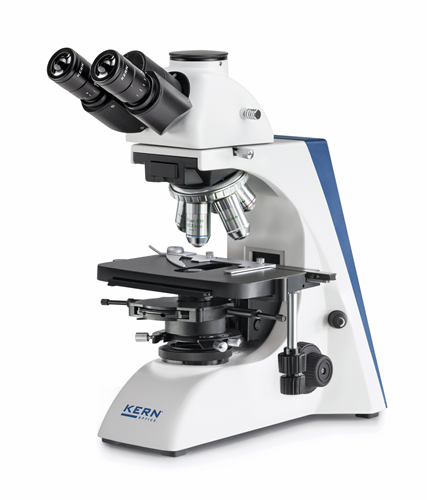
OBN 159
Transmitted light microscopes
Model
OBN 159
Optical System
Infinity
Tube
Trinocular
Eyepiece
Eyepiece HWF 10x / Ø 20mm with anti-fungus, high eye point
Price
€ 2940.-
Calibration
DAkkS calibrations are also possible on site
Observation and classification of insects under the microscope
View all other applicationsApplication Description
Insects are extremely important in the agricultural landscape. However, their numbers have declined dramatically in recent decades. It is therefore important to examine species under the microscope, to describe them in order to be able to differentiate them from one another, to research their genetics and evolution and in this way to be able to put a stop to species extinction.
Additional information
When studying agricultural sciences, you analyse the structures and processes of organisms in the soil and their interaction with their environment. You look at anatomy, tissue and cells. In insect research, for example, the morphology, body structure and structure of the piercing tools and reproductive organs play a crucial role. These fine structures are examined microscopically. Insects are essential for the balance of ecosystems. But in recent decades their populations have declined dramatically. It is therefore important to describe species in order to be able to differentiate them from one another, to research their genetics and evolution and in this way to be able to put a stop to species extinction.
All prices plus VAT and shipping costs valid until 12.10.2026 *
For expert advice, please contact:
Application Headline
Observation and classification of insects under the microscope
Application Description
Insects are extremely important in the agricultural landscape. However, their numbers have declined dramatically in recent decades. It is therefore important to examine species under the microscope, to describe them in order to be able to differentiate them from one another, to research their genetics and evolution and in this way to be able to put a stop to species extinction.
Additional information
When studying agricultural sciences, you analyse the structures and processes of organisms in the soil and their interaction with their environment. You look at anatomy, tissue and cells. In insect research, for example, the morphology, body structure and structure of the piercing tools and reproductive organs play a crucial role. These fine structures are examined microscopically. Insects are essential for the balance of ecosystems. But in recent decades their populations have declined dramatically. It is therefore important to describe species in order to be able to differentiate them from one another, to research their genetics and evolution and in this way to be able to put a stop to species extinction.


| Price |
€ 2,940.-
|
Note :
Net, ex works, excluding VAT| Model article-code |
OBN 159
|
| Model-Serie |
OBN-15
|
| Assortment |
Optics
|
| Product Type |
Microscopes
|
| Product group |
Transmitted light microscopes
|
| Product usage type |
Main article
|
| EAN code (Model) |
4045761267824
|
| Planned start date |
2022-1HJ
|
| Sales Clearance |
yes
|
| Customs tariff number |
90118000
|
| Article Status |
active
|
| PGS-ID |
PGS-2-1-1
|
| CE Label |
yes
|
| Country of Origin |
CN
|
| Optical System |
Infinity
|
| Tube |
Trinocular
|
| Eyepiece |
Eyepiece HWF 10x / Ø 20mm with anti-fungus, high eye point
|
| Standard Objectives |
4x;PH 100x;PH 10x;PH 20x;PH 40x
|
| Objective quality |
Infinity Plan
|
| Illumination |
3W LED (transmitted light)
|
| System |
Upright
|
| Tube type |
Siedentopf
|
| Tube angle |
30°
|
| Tube rotation |
yes
|
| Nosepiece positions |
5
|
| Eye distance (max) |
75 mm
|
| Eye distance (min) |
50 mm
|
| Adjustable dioptre |
both-sided
|
| Focusing mechanics |
coaxial coarse and fine drive
|
| Fine drive minimum |
0.002 mm
|
| Table traveling distance |
78 mm; 55 mm
|
| Aperture diaphragm |
yes
|
| Condenser Type |
PH universal rotary condenser
|
| Condenser aperture |
1.25
|
| Condenser mounting |
centerable
|
| Dimensions (W×D×H) |
390×200×400 mm
|
| Power supply kind |
Power adapter
|
| Input Voltage |
100 V - 240V AC 50/60Hz 0,3A
|
| Protection Class |
Class III - Low voltage
|
| Cable attachment |
removable
|
| Storage Temp Min |
-5 °C
|
| Stotage Temp Max |
40 °C
|
| Dimensions packaging (W×D×H) |
535×370×270 mm
|
| Gross weight |
11 kg
|
| Net weight |
10 kg
|
| Shipping method |
Parcel service
|
| Packaging component - by weight - paper |
1.017 g
|
| Packaging component - by weight - cardboard |
756.648 g
|
| Packaging component - by weight - plastics |
7.119 g
|
| Packaging component - by weight - styrofoam |
252.216 g
|
| Packaging component - by weight - foam |
0 g
|
| Delivery time |
1 d
|
| WEEE |
yes
|
| Headline |
Phase Contrast Microscope KERN OBN 159
|
| Slogan |
Professionalism and versatility united in one microscope – with Koehler illumination for demanding applications
|
| Description |
|
| Product manager |
Johannes Conradt
|
| List price |
2940.00 €
|
| Warranty |
36 mon
|
| Illumination directions |
Transmitted light
|
| Transmitted light type |
LED
|
| Transmitted light intensity |
3W
|
| Dimmable |
Transmitted light
|
| Koehler |
yes
|
If you don't have an account, you can register your account by clicking the respective button below.
If you are a existing customer you can sign-in by clicking the button below.