
Please search the application by their name or their segment name or product code.
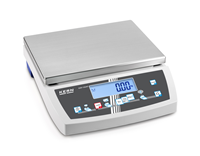
For smooth production of diverters in valves, it is important that the inventory of required assembly parts such as sealing rings, threaded pieces, etc. is checked regularly. Only by having the right stocks can a production standstill be prevented. Counting small parts is carried out on a counting scale to save time

In forge welding, welding flux is precisely weighed and metered to reliably protect the weld area from oxidation and contamination. This precise metering ensures consistently high weld quality and helps to avoid process errors and material waste.

A material thickness gauge allows for quick and precise control of the wall thickness of a newly developed valve. This ensures compliance with customer specifications, safeguards against safety requirements, and reliably tests the valve's functionality.

A sound level meter allows for quick and reliable testing of the noise emissions of machines and equipment before they are placed on the market. This facilitates better compliance with legal requirements, avoids the need for rework, and reduces subsequent costs for manufacturers.