
Please search the application by their name or their segment name or product code.

In medical diagnostics, urine is quickly and precisely analyzed for its specific gravity using a refractometer. This measurement aids in the evaluation of urine samples and provides information about concentration, protein, or glucose levels.

A phase-contrast microscope is used to perform a semen analysis, enabling a precise assessment of sperm count and quality. The clear visualization of the structures supports reliable diagnostics and provides a sound basis for further medical evaluation.
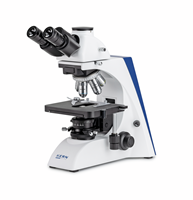
For the urinalysis, a drop of the sediment (solid components of the urine) is placed on a slide and examined with a microscope. For this check, the microscope should be able to achieve a magnification of 400x.
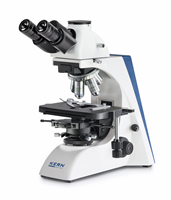
A spermiogram provides information about the sperm count and sperm quality in a man. A phase contrast microscope can be used for this examination, with which the structures (sperms) can be shown very well. This gives insightful information to make precise diagnoses and communicate the result to the patient. Invalid search result.