Please search the application by their name or their segment name or product code.

After production, finished parts are counted simply and accurately to ensure the correct quantity is delivered during order picking. Reliable piece counting prevents shortages, reduces complaints, and supports efficient shipping processes.

Molded parts are weighed at random during production to detect deviations from the specified target weight early on. This weight control supports quality assurance, reduces rework, and avoids unnecessary material and process costs.
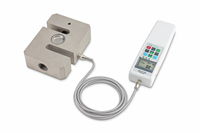
For hinges made of thermoplastic, which are particularly light, the pull-out force must be tested again and again. The optimal functioning of the hinge is crucial for the proper functioning of the entire component and for ensuring the required standards.
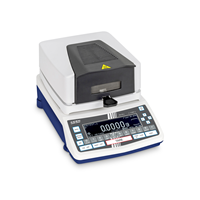
Quick and precise measurement of the moisture content in plastic granules to avoid steam bubbles, foam formation, filling and demoulding problems.
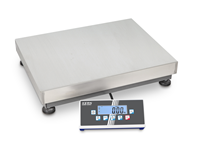
Accurate and rapid weighing of fillers and additives added to plastic granules. The correct amount of added substances avoids production errors and defective batches.
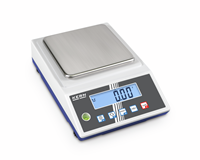
During series production, injection-molded parts are weighed quickly and precisely to reliably monitor the required quality and detect deviations early. This reduces defective parts, avoids rework, and allows for targeted optimization of the production process.

A precision scale is used to weigh finished injection-molded parts accurately and precisely during series production. This allows for targeted adjustments to the manufacturing process, while reducing rework, material waste, and production costs.
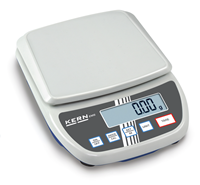
After production, EPP molded parts are weighed on a random sample basis to verify the required weight and thus the foam density. This ensures impact resistance and reduces the risk of quality defects or complaints.
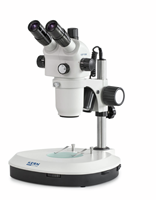
Testing laboratories examine workpieces and additive materials under a microscope to visualize internal structures and microstructures. Metallographic analysis supports quality control, material evaluation, and the optimization of production processes.
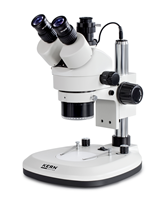
Using a microscope or an optical inspection unit, the production process is quickly and precisely visually monitored. Visual inspection supports the early detection of deviations and enables timely adjustments to prevent defective batches.