Please search the application by their name or their segment name or product code.

Small parts and components are counted precisely to reliably record and control stock levels. This saves time during inventory counts, simplifies stock management, and supports rapid provision for downstream processes.
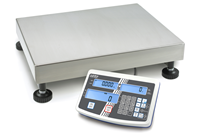
Components and accessories are precisely counted and picked for production orders. Accurate quantity tracking ensures material availability, prevents production downtime, and improves efficiency in the manufacturing process.
In the outbound stage, the produced quantity is compared with the ordered target quantity to ensure the correct delivery quantity. This rapid check helps to identify deviations early, analyze errors in the production process, and avoid incorrect deliveries.

Loaded pallets are fully weighed to reliably determine their actual shipping weights. Accurate weight recording helps to correctly calculate transport costs, avoid time losses, and reduce unnecessary additional fees in the shipping process.

Components are weighed to detect deviations from defined tolerance limits early on. This supports continuous production monitoring, helps avoid defective products, and reduces unnecessary costs in the manufacturing process.
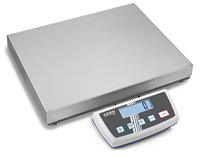
Packages ready for shipment are weighed to reliably determine their actual shipping weights. Accurate weight recording supports registration with the logistics company, helps control freight charges, and improves shipping processes.

Resin and hardener are weighed out in minute quantities to ensure the prescribed mixing ratio for two-component adhesives is maintained. This precise dosing promotes reliable curing and helps prevent processing errors and quality defects.

Adhesive quantities are weighed on a random sample basis to reliably verify the dosage in the production process. This helps to detect deviations early, to specifically check the machine settings, and to avoid quality defects in the bonding process.
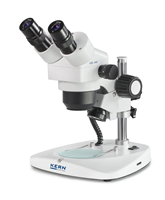
Components and work areas are viewed at magnification to reliably visually inspect fine assembly steps and samples. This helps to detect errors early, facilitates complex tasks, and ensures consistently high processing quality.

Solder joints on printed circuit boards are visually inspected on a random basis to detect faulty connections early. This helps to avoid quality defects, reduce complaints, and lower subsequent costs in the production process.
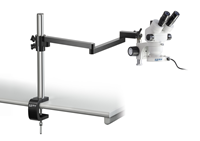
Damaged circuit boards are inspected under optical magnification and selectively reworked to reliably detect even the finest hairline cracks or breaks. This facilitates precise repairs, improves the quality of work, and helps to reliably rectify functionally critical damage.
Damaged circuit boards are inspected under optical magnification and selectively reworked to reliably detect even the finest hairline cracks or breaks. This facilitates precise repairs, improves work quality, and helps to reliably rectify functionally critical damage.