Please search the application by their name or their segment name or product code.
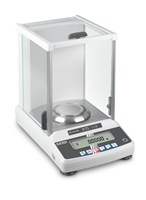
Before final assembly, the stent body is weighed to detect any dimensional or manufacturing deviations early on. This weight check helps to reject unsuitable parts and ensures compliance with the high quality standards required in medical technology.
The analytical balance is essential for inspecting the stent base bodies both after electropolishing and before final assembly. After electropolishing, the mass loss is measured to provide information about the smoothness and roundness of the stents. Before final assembly, the balance enables an intermediate inspection, during which stents that are too large or too small are sorted out to ensure that only the highest quality products are processed.

Weighing the workpiece between laser cutting and electropolishing to check for residues that were not properly separated during laser cutting. Prevents defective goods and guarantees a high-quality product
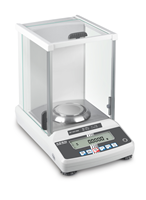
The ePTFE denture material undergoes precise density testing to reliably ensure material quality during manufacturing. This allows deviations to be detected early and targeted support to produce flawless products.
Dosage of color powder in the range 0.1 mg for the preparation of a coloring solution. Exact mixing according to specifications is a guarantee for a constant stock solution
Before being sold to processors, stents undergo a precise final weight inspection to identify and remove defective products early on. This ensures that only flawless stents meeting the required specifications enter the further process.
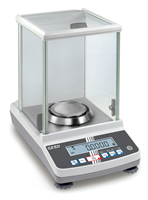
Mixing a suspension solution with the correct pH value. The components of the mixture should be weighed to the nearest milligram. This guarantees a perfect end product
Fast and accurate sample preparation for determining the shrinkage behavior of materials in incoming goods for quality assurance
Weighing of spring wire elements after electro-polishing. Checking the springs with regard to the target weight is the guarantee for a perfect product
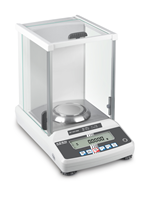
After electropolishing, stents are precisely weighed to reliably control material removal and detect deviations early. This improves quality control and ensures that only products meeting specifications proceed to the next stage of the process.
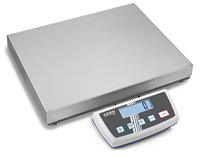
The package weight is reliably determined before shipping to ensure compliance with the maximum permissible weight of 30 kg. This avoids additional costs due to excess weight and supports an efficient shipping process.

The platform scale enables precise weighing of raw materials for stent production, for example, the suspension for coating polyester stents in the 10 kg range. Precise adherence to the mixing ratio ensures that the coating is flawless and that the stents meet the high quality standards.
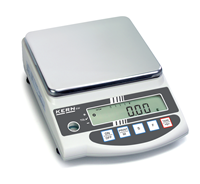
Incoming goods are checked by weight to quickly and reliably verify the quantity delivered. This reduces manual counting, speeds up the inspection process, and saves time and costs.

Sieve analysis is performed quickly and precisely to identify undesirable particle sizes early on and ensure the required material quality. This prevents production disruptions and reliably improves the quality of the final product.
Liquids used to dilute dye solutions are precisely weighed in 10 mg increments to ensure accurate dosing. This prevents inaccurate results and guarantees consistent quality of the final product.
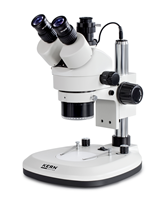
The stereomicroscope is ideal for precise final inspection of stents, particularly regarding bar width, joints, and straightness. Visual inspection guarantees the high quality of the stents.
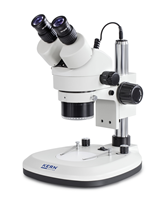
During the assembly process, stents are inspected under a microscope at high resolution for geometry, polishing, crimping, and residues. This microscopic inspection supports reliable quality assurance and helps to identify errors in the production process early on.
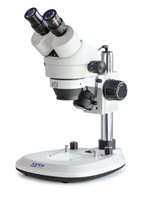
Wire ends in crimp connections are subjected to random microscopic inspection to ensure proper execution and long-term reliability of the connection. This allows manufacturing defects to be detected early and supports consistently high product quality.
After electropolishing, stents are visually inspected for surface quality and, in particular, for uniform web widths. This inspection helps to identify material weaknesses early and reduce the risk of stent breakage during subsequent use.
Stents are visually inspected after sandblasting to reliably detect and remove any remaining sand grains or other particles. This ensures surface quality and reduces the risk of contamination in subsequent processes.
Visual inspection of the laser cutting on the metal tube. Breaks or errors from laser cutting are thus recognized. Since the production is subject to strict quality controls, this process is indispensable
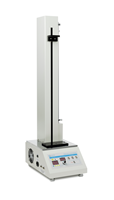
The motorized test rig is used for tensile testing of ePTFE vascular grafts to verify their tear resistance. These tests ensure that the grafts can withstand the high mechanical demands. They safeguard product quality and reduce the risk of product defects.