
Please search the application by their name or their segment name or product code.
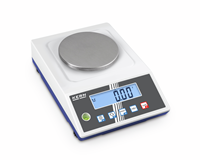
At a botanical institute, plant seeds are harvested and dried and sent to interested gardeners and specialized companies. The quantity of seeds is weighed. Since we're talking about very small weights (0.001g-50g), a laboratory scale is used. This is important because a standard scale would not be able to accurately measure the subtle weight differences, which would be detrimental to either the grower or the customer.
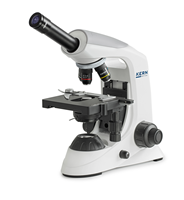
Plant cells and microorganisms are examined microscopically to detect disease-causing pathogens such as fungi or bacteria. This analysis supports plant biology, helps in assessing plant health, and provides important insights into ecological relationships.

Plant samples are examined microscopically to precisely identify and describe cell types, tissue structures, and biological characteristics. This supports education, research, and the sound assessment of plant processes in agricultural science and phytopathology.