
SegmentImages

Institute for Evolutionary Biology

Institutes of evolutionary biology investigate the origin, modification, and diversity of life, combining classical basic research with modern methods from genomics, data analysis, and fieldwork. This field is increasingly characterized by questions concerning biodiversity, adaptation to environmental changes, and the genetic basis of evolutionary processes. At the same time, interdisciplinary approaches are gaining importance, for example, at the interface with ecology, nature conservation, and bioinformatics. Institutions in this area must combine scientific excellence, methodological rigor, and international collaboration. This ensures that the field remains central to understanding biological diversity and to generating reliable insights into the impacts of global changes on organisms and populations.

Application Search

Please search the application by their name or their segment name or product code.
Filter by Product Group
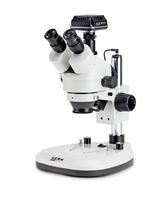
OZL 464C825
OZL 464C825

Chicken embryos are examined using a light microscope to reliably assess their development and potential responses to various stress situations. Microscopic analysis supports precise observation, improves evaluation, and provides a sound basis for embryological investigations.
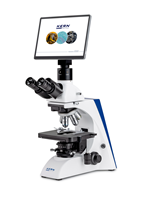
OBN 135T251
OBN 135T251

In the life sciences, light microscopes are well suited for viewing cells. For example, they are often used to study microorganisms. In this way, disease-causing germs such as fungi or bacteria that have infected the plant can be detected. These are important results that allow conclusions to be drawn about an entire ecosystem.
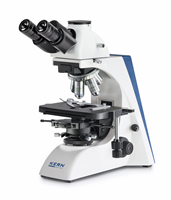
OBN 159
OBN 159

In insect research, the physique and the structure of the piercing tools and the reproductive organs play a decisive role. These fine structures are examined under a microscope in order to describe species, distinguish them from one another and thus halt the extinction of species

Back