Please search the application by their name or their segment name or product code.
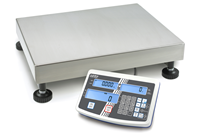
Small injection molded parts such as threads, hinges or snap fasteners are counted precisely by weight for invoicing purposes. A counting scale is used to enable the number of pieces to be recorded quickly and accurately. This significantly reduces counting times and thus saves both working time and costs.

The strength of suspension holes on injection molded elements should always be checked prior to assembly. A tensile force test is provided for this. It is essential for security.
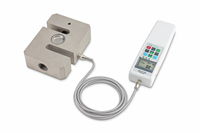
For hinges made of plastic that are manufactured using injection molding and are particularly light, the pull-out force must be tested again and again. The pull-out force allows us to assess whether the hinges meet the required load forces at the time of production. Ideally, it can also be estimated whether the components will permanently meet the loads.”

When coloring injection-molded plastic buttons, color pigments are weighed precisely and mixed into the granules. Only precise dosing guarantees the required color shade and consistency – deviations lead to complaints, rejects, and avoidable costs.
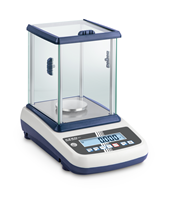
Tiny components of hearing aids, such as domes, sound tubes, or filters, are counted by weight. A precision scale determines the reference weight of individual parts, thus enabling accurate quantity determination for production and customer orders.