Please search the application by their name or their segment name or product code.
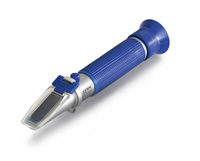
A refractometer allows for the quick and precise determination of the salinity in groundwater and irrigation water. This enables the early detection of critical pollution, the prevention of agricultural damage, and the targeted implementation of measures for sustainable water management.
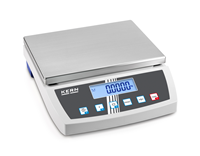
A handy scale is used to precisely weigh a defined mass of soil for geotechnical analysis. This allows for reliable preparation of soil samples and supports meaningful test results.
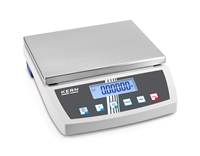
To determine the particle size distribution of a soil sample, the individual sieve residues are weighed after the sieving process. The determined mass fractions per mesh size form the basis for creating the grading curve. This method allows for a reliable assessment of soil properties with minimal equipment requirements.
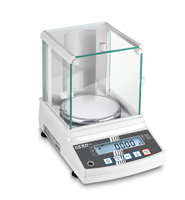
To determine the water content, a soil sample is taken in the field, sealed airtight, and weighed in the laboratory as fresh mass. After subsequent drying until a constant weight is achieved, the sample is weighed again. The difference between the wet and dry mass yields the moisture content – a key parameter for assessing soil mechanical properties.