Please search the application by their name or their segment name or product code.
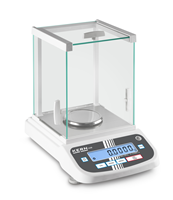
In microbial diagnostics involving human body fluids, host DNA must often be depleted. To assess the effectiveness of this process, samples are weighed before and after DNA reduction. Analytical balances provide the necessary accuracy for this task.
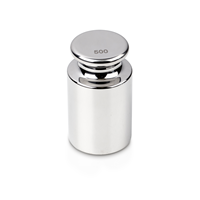
To ensure accurate measurements, scales are calibrated and adjusted using standardized test weights. By placing a weight with a known nominal value on the scale, the reading is checked and adjusted if necessary. This guarantees measurement accuracy in commercial transactions and compliance with legal metrology regulations.

In the laboratory, DNA samples are weighed using a precision balance to reliably determine the reduction of host DNA after the preparation step. Accurate weight measurement supports process control, facilitates instrument validation, and improves the reliability of subsequent analyses.

Many laboratory procedures begin with the weighing of samples or reagents during preparation. Precision balances are also used to verify the performance of dosing devices such as pipettes.
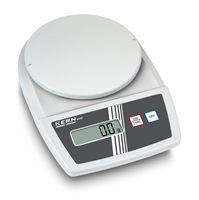
After production, diagnostic fluids are manually filled into ampoules and then weighed for verification. This ensures that the specified quantity is correct and the quality of the diagnostics is reliably guaranteed.
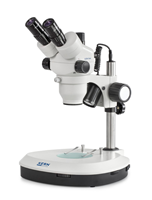
When working with in vitro tissue samples, precise positioning under a microscope is essential. Due to the specimen’s three-dimensional structure, it is crucial to use a system that provides a clear spatial impression. This enables accurate handling and placement during preparation.
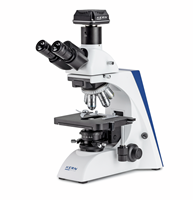
The acid-fast bacterium Mycobacterium tuberculosis can be easily visualized by light microscopy after staining. The prerequisite is that the microscope used enables a 1000x magnification
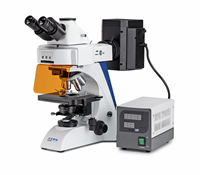
Fluorescence in situ hybridisation (FISH) enables the visualisation of chromosomal abnormalities in humans or bacterial ribosomal DNA using DNA probes labelled with fluorescent dyes. A fluorescence microscope is the instrument of choice for this application.