Please search the application by their name or their segment name or product code.
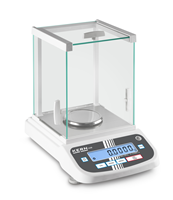
Initiators such as peroxides or azo compounds are weighed precisely in the laboratory to start polymerization reactions in a controlled manner. This precise dosing supports reproducible reaction processes and helps to achieve desired polymer properties in plastics, fibers, or foams.
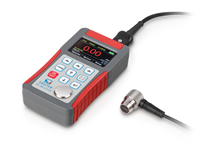
Before filling a container with chemicals, it is advisable to inspect the container to determine its material (is it suitable for the chemical type) and material thickness. The wall thickness of the container (with or without coating) can be determined using a material thickness gauge. This inspection is important for employee safety.
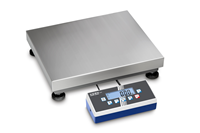
Packages containing filled chemical fiber granules, ready for shipment, are weighed to determine the correct shipping weight for freight charges and the parcel service provider. This speeds up the shipping process, avoids additional postage, and improves cost control.

Polyamide workpieces are precisely weighed before and after conditioning to determine the amount of water absorbed. The exact weight difference indicates whether the specified moisture content has been reached and ensures safe further processing.
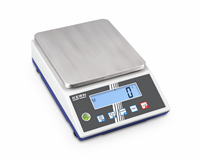
Dosing systems meet all relevant properties and requirements that are important for optimal dosing results and process-safe media transfer. Nevertheless, the dosing agent quantity is checked regularly and at random points. A precision scale is used for this purpose. This check is important because an insufficient dose (too much or too little) could damage the final product.