Please search the application by their name or their segment name or product code.

Injection-molded parts are counted by weight after being removed from the injection molding machine and transferred in groups into packaging containers. Weight-based counting speeds up the packaging process and reduces manual counting errors.
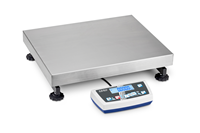
When picking small parts for the automotive industry in large quantities, manually counting the individual parts is very time-consuming and often error-prone. This is where the counting scale comes in. This enables safe and error-reduced inventory recording in a fraction of the time that would be required for manual counting, thus saving time and money.

Custom injection-molded small parts such as plugs, protective caps, buffers, or hose fittings are counted for invoicing purposes based on customer orders. A counting scale enables rapid quantity determination and reduces shortages of lightweight plastic parts.

When installing car headliners, the required amount of adhesive is precisely measured to ensure a secure and visually clean fix. This precise dosage reduces the risk of premature detachment and helps avoid customer complaints.
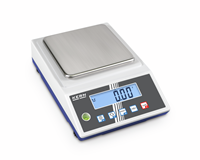
In the cup test for quality assurance of polyurethane foams, the liquid components are precisely weighed and then reacted on a small scale. Accurate dosing is crucial to achieve reproducible results and reliably test the required insulation or cushioning properties.

Individually produced felt samples are cut, documented, and archived with their exact weight. This weight recording supports traceability, ensures product specifications are met, and serves as proof in case of complaints.
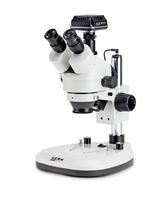
Leather used for car interiors should undergo a surface inspection under a microscope. This serves as quality assurance by identifying defects such as scratches or small stains. Furthermore, the inspection guarantees consumer safety and health by detecting harmful chemicals.

During the production of locking mechanisms and springs for seatbelt systems, a microscope with a long working distance precisely monitors the shape and size of the components. This continuous monitoring ensures consistently high manufacturing quality and contributes significantly to product safety.

In airbag systems, the force applied to the trigger mechanism is monitored using a force measuring device. This precise testing ensures functional reliability and helps guarantee that the airbag only deploys under a defined load.