
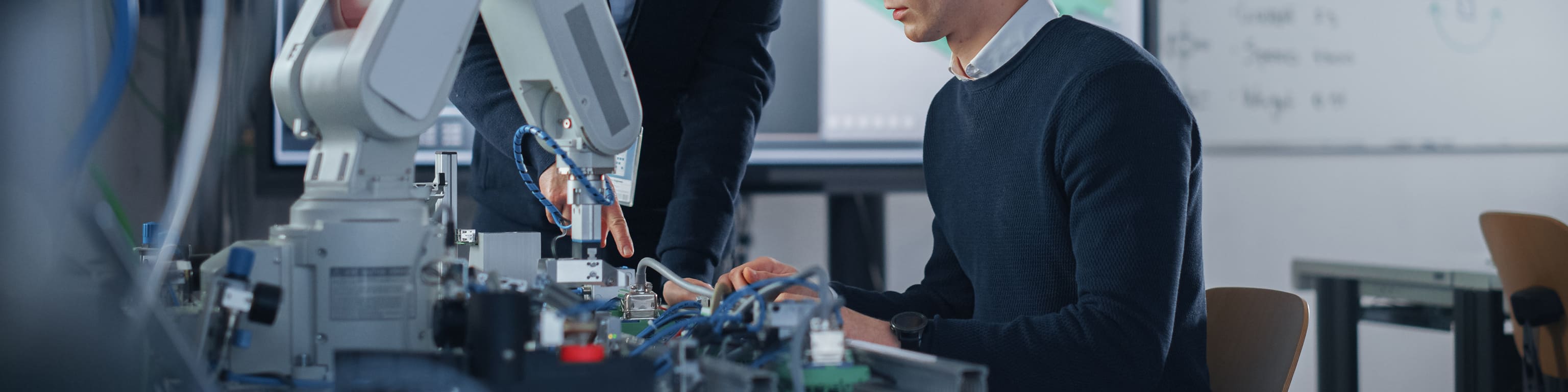
Institutes for engineering
Engineering institutes are specialized institutions that conduct research and development in various fields of engineering. Germany is home to numerous renowned institutes that conduct both basic and applied research. One example is the Karlsruhe Institute of Technology (KIT), which is considered a leading research university in engineering and natural sciences. According to the 2024 Nature Index, KIT ranks first among German universities in the field of natural sciences. Another example is the Fraunhofer Institute for Silicon Technology (ISIT) in Itzehoe, which specializes in microsystems technology, power electronics, and battery systems. These institutes contribute significantly to Germany's technological development and innovative strength by working closely with industrial partners and developing new technologies and processes.
Application Search
Please search the application by their name or their segment name or product code.


In bioreactor processes, the fill volume is continuously monitored to precisely detect process changes. This creates stable conditions and supports reliable process control over long operating times.

Nutrients such as magnesium, sulfur springs, or vitamins are precisely weighed and added to the bioreactor in a controlled manner during bioprocesses. This precise dosing ensures reproducible experimental procedures, stable process conditions, and consistent product quality.

Feed and inducer additions are measured gravimetrically to precisely monitor the quantities introduced into the bioreactor process. This enables controlled execution of sensitive addition steps and supports reproducible process conditions.

Acid, base, and other liquid additions are monitored gravimetrically to accurately measure dosage quantities. This improves the traceability of additions and supports consistent process quality.

To produce solid-colored glass, oxide coloring with metal oxides is used. The powdered additives are precisely weighed using a precision scale. The recipe is adhered to very precisely, as the color development of the glass must be repeatable and the individual additions will add up during production.